
Hall Place and Gardens * (Bexley)
Brief Description
* on The National Heritage List for England, Parks & Gardens
Hall Place is an early Tudor mansion built near the River Cray for Sir John Champney, Lord Mayor of London. The house was enlarged over the years and passed through numerous owners, once used as a school. The house and grounds were opened to the public in 1952 and today have a number of formal garden areas, including an enclosed Elizabethan garden, rose garden, herb garden, rock garden, sunken garden, topiary lawn. The working nursery dates from the original walled kitchen garden for the house. The grounds also have open areas for sports and recreation.
Practical Information
- Site location:
- Bourne Road, Bexley
- Postcode:
- DA5 1PQ
- What 3 Words:
- usage.horns.dogs
- Type of site:
- Public Gardens, Public Open Land
- Borough:
- Bexley
- Open to public?
- Yes
- Opening times:
- Formal gardens April-Sept 9am-10pm, Oct-Mar 9am-4pm. House 10am-5pm except Bank Holidays Xmas/New Year. Park & sports fields unrestricted
- Special conditions:
- Admission fee to House, Butterfly Jungles, All About Owls. No dogs in formal gardens, under control in other areas. Dog waste bins provided
- Facilities:
- Museum, Riverside Café, toilets, visitor centre/shop, car park. Butterfly Jungles and Plant Shop. Restaurant in Jacobean barn. Football and cricket pitches; changing rooms.
- Events:
- Annual Flower Show in July. Exhibitions, educational programme. Has opened for Open House London
- Public transport:
- Rail: Bexley; Crayford. Bus: 132, 229, 492, B15.



- Research updated:
- 01/11/2019
- Last minor changes:
- 31/03/2026
Please check with the site owner or manager for latest news. www.hallplace.org.uk; www.bexley.gov.uk
Full Site Description
Site on The National Heritage List for England, Parks and Gardens, for Register Entry see https://www.historicengland.org.uk/listing/the-list
Hall Place is an early Tudor 3-sided mansion set in beautiful, formal gardens on the banks of River Cray. The mansion was built between 1537-40 for Sir John Chapenois /Champney, a former Lord Mayor of London, incorporating older fabric and was enlarged with extensions dating from 1650. C18th walls enclose the north garden, which has a herbaceous border running along its length, and there are splendid C18th iron gates attributed to Thomas Robinson. The estate passed through numerous owners, and in the C18th was acquired by the Dashwood family. Sir Francis Dashwood was not only a politician and Chancellor of the Exchequer (1762/3) but also founder of the Hellfire Club. From 1795 Hall Place was leased as a school for young gentlemen. From the 1870s changes were made to the property by Maitland Dashwood, grandson of Sir Francis, including addition of the lodge by architect Robert William Edis. Hall Place was subsequently let to various aristocratic and fashionable tenants into the C20th, the last tenant being Lady Limerick who lived here between 1917-43. During WWII Hall Place was used as an intercept station by the US Army Signal Corps. After the war, the house and grounds were purchased and opened to the public in 1952 by the Duchess of Kent.
Details of the garden development before the C20th are uncertain, although numerous trees are thought to have been planted in the C19th. The grounds are fairly level; an oval drive approaches from the east around a lawn planted with numerous trees including mature plane, catalpa and chestnut. Bedding and lawn to the south of the house is bounded by the River Cray to the south. To the south-west of the house is a formal rose garden with a yew hedge to the west and with rising terraced lawn to the north-west that features clipped yew figures depicting the Queen's Beasts, which were planted in 1953 to commemorate the Coronation of Elizabeth II. These were pre-dated by topiary chess pieces planted by Lady Limerick in 1935, found along the north-west side of the Hall. There are more lawns to the north of the Hall, with massed bedding, a sundial and wrought iron gates. To the west the lawns are decorated with scattered trees, some of them mature. Beyond these lawns is a herb garden and a shrubbery. Lawns extend south and south-west of the formal gardens to the banks of the River Cray, the southern banks are lined with weeping willows. A footbridge in the north/east corner leads to the water meadows and sports pitches beyond. To the west of the car park is the original walled kitchen garden now used as a working plant nursery. The Jacobean Barn, refurbished in 1990, and C17th stables are used as a restaurant, currently the Miller and Carter Steak House (2019). A 'Flora-for-Fauna' garden of native British plants has been developed to promote biodiversity by LB Bexley in conjunction with the Duchess of Hamilton and the Flora-for-Fauna Society.
To the north of Bourne Road is North Field (q.v.), consisting of more parkland that was once part of the Hall Place estate, with relict avenues of mature trees. The best is an avenue of limes running east/west parallel to the Bourne Road, possibly relict from an avenue shown on a map of Hall Place estate of 1768. An avenue of younger copper beech runs north from the western end of Bourne Road and clumps and individual mature trees decorate the site.
To the north-east of the playing fields is an area of ground known locally as Crayford Stadium Rough. As the name suggests this is an area of rough ground behind Crayford Greyhound stadium. The area that is bordered by the river Cray to the north, contains several wild plants rare in London.
Hall Place and Gardens was for a time managed by Bexley Heritage Trust in partnership with LB Bexley Council but in April 2017 maintenance reverted to the council. Hall Place and Gardens now provides numerous activities including a changing programme of exhibitions in both the house and the Stables Gallery, and also has responsibility for Bexley's museum collection of some 50,000 items, some of which are displayed in the house. There is an active education programme for schools and other educational and recreational facilities include the Butterflies Jungle and Plant Shop and All About Owls, run by Jambs Owls.
The Historic Buildings and Monuments Commission for England was established in 1984 and was commonly called English Heritage. In April 2015 it split into 2 separate entities, Historic England (HE), which continues to champion and protect the historic environment, and the English Heritage Trust, whose role is to look after the 400+ historic sites and monuments owned by the state. HE manages the National Heritage List for England (NHLE) that includes over 400,000 items ranging from prehistoric monuments to office blocks, battlefields and parks, which benefit from legal protection.
Sources consulted:
NHLE Register of Parks and Gardens of Special Historic Interest, Greater London; Country Life 21 Jan 1922 pp.80-87; Cherry B and Pevsner N, The Buildings of England, London 2: South, 1983, pp.135/137; https://www.hallplace.org.uk/history/
Further Information (Planning and Conservation)
- Grid ref:
- TQ501743 (550246,174175)
- Size in hectares:
- 65
- Site ownership:
- LB Bexley
- Site management:
- LB Bexley Parks and Open Spaces
- Date(s):
- 1537-40. Public gardens: 1952
- Designer(s):
- Listed structures:
- SAM: Hall Place. LBI: Hall Place; Garden Walls, Gate Piers, and Gates to north and west of Hall Place LBII: Barn, Granary re-erected to north-east of Hall Place. Local list: Lodge, stables, mill house.
- On National Heritage List for England (NHLE), Parks & Gardens:
Yes- NHLE grade:
- Grade II
- Registered common or village green on Commons Registration Act 1965:
No- Protected under London Squares Preservation Act 1931:
No
Local Authority Data
The information below is taken from the relevant Local Authority's planning legislation, which was correct at the time of research but may have been amended in the interim. Please check with the Local Authority for latest planning information.
- On Local List:
- No
- In Conservation Area:
- No
- Tree Preservation Order:
- No
- Nature Conservation Area:
- To be checked (Crayford Rough?)
- Green Belt:
- Yes
- Metropolitan Open Land:
- No
- Special Policy Area:
- No
- Other LA designation:
- ? possible some conservation interest in Crayford Rough
Photos
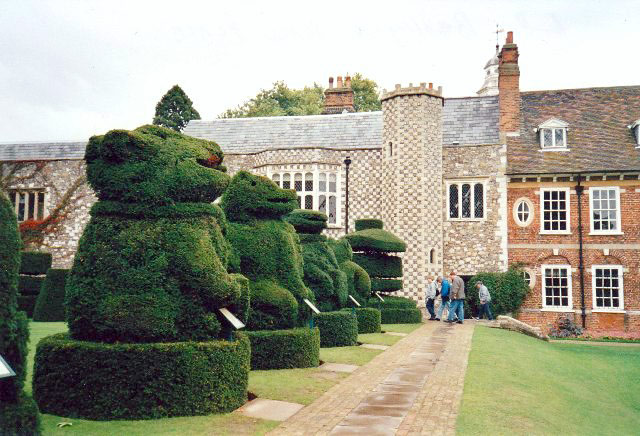
Hall Place and Gardens, Topiary Garden, September 2001. Photo: S Williams
2001 
2001 
2001 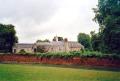
2001 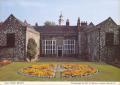
1980 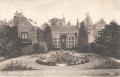
1910 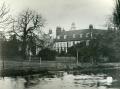
Click a photo to enlarge.
Please note the Inventory and its content are provided for your general information only and are subject to change. It is your responsibility to check the accuracy.