
St Dunstan-in-the-West Burial Ground (City of London)
Brief Description
The garden is a fragment of the former burial ground of St Dunstan in the West, the church located further south facing onto Fleet Street. Bream's Buildings was an C18th close off Chancery Lane that was extended to Fetter Lane in 1882. St Dunstan's was the last medieval City church to be rebuilt. First mentioned in c.1185, it was later known as St Dunstan in the West to distinguish it from St Dunstan in the East. The old church escaped the Great Fire in 1666, but by the early C19th was dilapidated and a new church was built by 1833 further to the north on the part of the burial ground. What remains of the burial ground is now overlooked by 1960s offices, a small public garden entered through a modest gate, from where steps lead to a raised area of grass, trees and shrubs, re-landscaped by 2009. A few tombstones remain inside the boundary railings and in shrubbery on the west perimeter.
Practical Information
- Site location:
- Bream's Buildings
- Postcode:
- EC4A 1DZ
- What 3 Words:
- reform.dress.spits
- Type of site:
- Public Gardens
- Borough:
- City of London
- Open to public?
- Yes
- Opening times:
- 8am - 7pm or dusk if earlier
- Special conditions:
- Facilities:
- Events:
- Public transport:
- Tube: Chancery Lane (Central)



- Research updated:
- 01/06/2010
- Last minor changes:
- 08/04/2026
Please check with the site owner or manager for latest news. www.cityoflondon.gov.uk/openspaces
Full Site Description
This is a fragment of the former burial ground of St Dunstan in the West Church, which is further south facing onto Fleet Street. The site is on Bream's Buildings, which was an C18th close off Chancery Lane that was extended to Fetter Lane in 1882. It has mature trees and is overlooked by offices of architects Yorke, Rosenberg & Mardall built 1960/61. St Dunstan's Church was the last medieval City church to be rebuilt, and was first mentioned in c.1185, known as St Dunstan's Over Against the New Temple in 1237, later that century becoming known as St Dunstan in the West to distinguish it from St Dunstan in the East (q.v.). St Dunstan was Saxon Archbishop of Canterbury. The old church escaped the Great Fire in 1666, which halted only 3 houses to the east of the church. However by the early C19th the church was dilapidated and in 1829 an Act of Parliament was passed to enable it to be taken down and a new church built to designs of John Shaw. Building commenced in 1831 and it was consecrated in 1833, although Shaw did not live to witness this, having died in 1832.
While the foundations of the old church were excavated a lead coffin of 1747 was discovered and accidentally broken open in which the body was, 'to the astonishment of all', extremely well preserved. The old church had projected much further forward onto Fleet Street 'and was so surrounded by shops or stalls as to render the road-way dangerously narrow' (Godwin). The present church was built further north and stands on the site of the burial ground; earlier burials apparently appeared to have been reinterred in different positions. An extraordinary church clock made by Thomas Harrys in 1671 had formerly overhung Fleet Street with two life-size wooden carvings of savages with clubs in their right hands with which they struck the quarter hours, their heads moving at the same time. This was removed in 1830 to St Dunstan's Lodge, the Marquis of Hertford's villa in Regent's Park (q.v.) when the old church was demolished. There was also a statue of Queen Elizabeth I originally at Ludgate until that was demolished, which was installed in 1766. What remains of the burial ground has modest gate/brick gate piers with a low brick wall to Bream's Buildings, behind which is a raised area of grass. Boundary railings are set back from the wall and the few tombstones remaining are effectively outside, being in front of the railings. The garden has a few larger trees and some shrubbery.
Sources consulted:
Simon Bradley & Nikolaus Pevsner, 'The Buildings of England, London 1: The City of London', 1997 (1999 ed.); Ben Weinreb & Christopher Hibbert, 'The London Encyclopaedia' (Macmillan, revised ed. 1993); George Godwin & John Britton 'The Churches of London: A history and description of the Ecclesiastical Edifices of the Metropolis, Volume I', London, 1838; London Diocesan Advisory Committee for the Care of Churches data
Further Information (Planning and Conservation)
- Grid ref:
- TQ311813 (531240,181380)
- Size in hectares:
- 0.0479
- Site ownership:
- Diocese of London
- Site management:
- City of London Corporation Open Spaces Dept.
- Date(s):
- Medieval; 2009
- Designer(s):
- Listed structures:
- None
- On National Heritage List for England (NHLE), Parks & Gardens:
No- Registered common or village green on Commons Registration Act 1965:
No- Protected under London Squares Preservation Act 1931:
No
Local Authority Data
The information below is taken from the relevant Local Authority's planning legislation, which was correct at the time of research but may have been amended in the interim. Please check with the Local Authority for latest planning information.
- On Local List:
- No
- In Conservation Area:
- No
- Tree Preservation Order:
- Yes
- Nature Conservation Area:
- No
- Green Belt:
- No
- Metropolitan Open Land:
- No
- Special Policy Area:
- No
- Other LA designation:
- Strategic View - Consultation Area
Photos
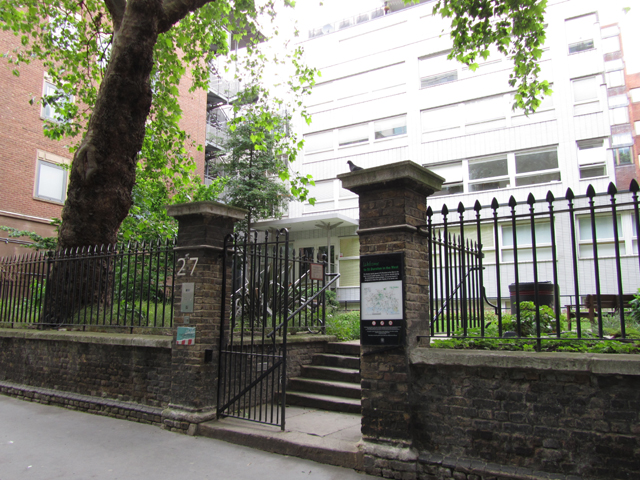
St Dunstan-in-the-West Burial Ground, June 2010. Photo: S Williams
2011 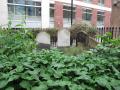
2010 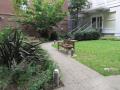
2010 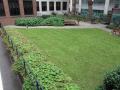
2010 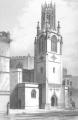
1838 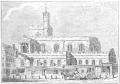
1739 Click a photo to enlarge.
Please note the Inventory and its content are provided for your general information only and are subject to change. It is your responsibility to check the accuracy.