
City of London Cemetery and Crematorium * (Newham)
Brief Description
* on The National Heritage List for England, Parks & Gardens
By 1849 most of the City of London's churchyards were full and unsanitary, and in the early 1850s interment ceased under the Metropolitan Burials Act. In 1854 the City's Commissioners of Sewers purchased farmland at Little Ilford, once part of Epping Forest, for a new cemetery to serve the City. It was designed by William Haywood, Engineer and Surveyor to the Commissioners with an extensive network of curving paths and avenues, two Gothic chapels and Catacomb Valley formed by draining a former fishpond, its grand entrance flanked by porter's lodge and superintendent's house. It was landscaped by William Davidson with gardens, trees and shrubberies. The first burial took place in June 1856. By dint of purchasing the land the City of London became a 'commoner of Epping Forest' and as such was influential in keeping the Forest from further encroachment and enclosure. One of the first crematoria to be built in this country was opened here in 1904, with the first cremation taking place in 1905; in 1971-3 it was replaced by a second Crematorium, the Old Crematorium becoming a chapel of remembrance. A small garden of rest was created near the Crematorium in the 1920s followed by a small Memorial Garden in 1930, but in 1953 well-known landscape architect Richard Sudell was commissioned to design substantial Memorial Gardens on 4 ha. of land, catering for the increased demand for cremation after WWII.
Practical Information
- Previous / Other name:
- Aldersbrook Estate
- Site location:
- Aldersbrook Road, Manor Park
- Postcode:
- E12 5DQ
- What 3 Words:
- venue.races.wishes
- Type of site:
- Cemetery
- Borough:
- Newham
- Open to public?
- Yes
- Opening times:
- Monday-Sunday: 9am-5pm. Christmas Day, Boxing Day: 9am-3pm.
- Special conditions:
- Last entry 30 minutes before closing time. NOT PERMITTED: Dogs (with exception of assistance dogs); 3rd-party tour guides; wildlife photography.
- Facilities:
- Gatehouse Florist, Tea Room, toilets. Tree trails. Wheelchairs and mobility scooters may be borrowed from the main gate.
- Events:
- Public transport:
- Tube: East Ham (District, Metropolitan) then bus, Wanstead (Central) then bus. Rail: Manor Park then 15 minute walk. Bus 101, 551.



- Research updated:
- 23/03/2026
- Last minor changes:
- 31/03/2026
Please check with the site owner or manager for latest news. https://www.cityoflondon.gov.uk/services/births-deaths-citizenship-and-marriages/cemetery-and-crematorium
Full Site Description
Site on The National Heritage List for England, Parks & Gardens, for Register Entry see https://www.historicengland.org.uk/listing/the-list. The Historic Buildings and Monuments Commission for England was established in 1984 and was commonly called English Heritage. In April 2015 it split into 2 separate entities, Historic England (HE), which continues to champion and protect the historic environment, and the English Heritage Trust, whose role is to look after the 400+ historic sites and monuments owned by the state. HE manages the National Heritage List for England (NHLE) that includes over 400,000 items ranging from prehistoric monuments to office blocks, battlefields and parks, which benefit from legal protection.
In 1849, Colonel William Haywood, Surveyor and Engineer to the City of London Commissioners of Sewers, reported to the Commissioners that there were 88 churchyards within the square mile of the City in area covering c. 8.5 acres, and many in a terrible, overcrowded condition. The pressure for a new cemetery was further increased following the closure of City churchyards in the early 1850s, and in 1853 the Commissioners began looking for suitable land. In 1854 the City of London Commissioners purchased 200 acres of Aldersbrook Farm lands for £30,721 to create the new cemetery from the then owner, Lord Wellesley, a relative of the Duke of Wellington. Aldersbrook House, built in c.1580, was subsequently demolished.
Aldersbrook is first documented as a separate manor in the early C16th, and by 1517 it was the home of John Heron, Treasurer of Chamber to Henry VII and VIII. In the 1770s Aldersbrook was the largest estate in the area; in 1786 it was purchased by Sir James Long of Wanstead who demolished the manor house and the land was farmed. By dint of purchasing the land here the City of London became a 'commoner of Epping Forest' and as such was influential in keeping the Forest from encroachment and enclosure; Epping Forest was finally established through the Epping Forest Act of 1878.
The new cemetery was laid out by William Haywood in 1855 and unconsecrated ground opened in 1856, the first burial taking place on the 24th June, although it was not consecrated until November 1857 due to administrative complications and the need to resolve land claims, which required the enactment of the Burial Acts Amendment Bill. A proposed Catholic cemetery was never built. An immediate success, the cemetery was extended by William Hayward a number of times in subsequent decades (in 1859, 1861-2, 1875 and 1887). It is among the largest municipal cemeteries in Europe and is second largest in London after the huge St Pancras and Islington Cemeteries (q.v.).
City of London Cemetery has been described as William Haywood's 'masterpiece' and 'the finest example of a Victorian cemetery, as originally intended, remaining in the capital'. Haywood had worked with Joseph Bazalgette on the Abbey Mills pumping station, nicknamed 'the cathedral of sewage', which still stands adjacent to The Greenway (q.v.) further to the south in Newham. Haywood's layout for the cemetery included the extensive network of curving paths and avenues, which now comprise 7 miles of roads; two Gothic chapels; Catacomb Valley formed by draining the lake, a former fishpond, with the catacombs built into the lakeside banks. A special railway siding and station had been planned but this was never realised due to lack of finances. The grand entrance retains its original ornamental iron gates flanked by porter's lodge and superintendent's house.
The cemetery was landscaped throughout with gardens, trees and shrubberies, including rhododendrons that are magnificent in the late Spring. It was undertaken by landscape gardener William Davidson, who also laid out and planted the Old and New Cemetery in Ipswich (1855) and Rugby Cemetery (1863). A number of enclosures were formed to contain the reinterred remains from old City churchyards that were closed and cleared when the City was rebuilt in Victorian times, and there are also reinterments from churches destroyed as a result of bombing in WWII. There are over 35 of such reinterred churchyards here, including St Mary Aldermanbury, St Dionis Backchurch and St Mary Somerset.
In 1903 one of the first Crematoria to be built in this country was erected here, designed by D J Ross, Engineer to the Commissioners of Sewers and City Engineer from 1894-1905. It opened in 1904, with the first cremation in 1905. Its 80ft chimney is hidden beneath a Gothic framework. One wing of the Catacombs, which were 'not much in demand' was later converted into a Columbarium for ashes from the Crematorium. In 1971-3 a second Crematorium, with two chapels and six cremators able to deal with 40 funerals a day, was built and opened by the Lord Mayor, at which time the first crematorium was closed and converted into a chapel of remembrance and offices.
In the 1920s a small Garden of Remembrance had been created near the Crematorium, with a small memorial garden added in 1930, but it was in the 1950s that today's extensive Memorial Gardens were created, designed by Richard Sudell, now covering nearly 13 ha. with over 20,000 rose bushes. Richard Sudell (1892-1968), founding member of the Institute of Landscape Architects in 1929/30 and advocate of the suburban garden, was appointed by the City of London Corporation in 1953 to design extensive Memorial Gardens catering for the increased demand for cremation after WWII - by this time numbering 2,500 a year. His design for 'a compartmentalised memorial garden with sections offering different experiences divided by straight lines' and his use of modern materials, paving, geometrical form and colour in both hard and soft landscaping, with plants selected to provide seasonal colour and interest, is consistent with his work in other gardens, which in London included Dover Square (q.v.). Substantially completed by 1957, the majority of his design was carried out, apart from a sunken garden and lily pond. His aim was to provide restful and spiritual gardens for mourners and visitors alike.
Over half a million people have to date been buried or cremated here including William Haywood himself (d.1894) whose ashes are housed in the monument near the entrance that he designed in 1871 for the reinterred remains from the churchyards of St Andrew Holborn and St Sepulchre Holborn Viaduct. Others buried here include George Micklewright (d.1876), a C19th conservationist instrumental in saving Epping Forest; Elizabeth Everest (d.1895), nanny to Winston Churchill; two Lord Mayors of London; and George Binks, the inventor of wire ropes. A Memorial Wall and Garden of Remembrance dedicated to 250 City of London, Stepney and Bethnal Green Air Raid Civilian Casualties was erected and dedicated on 12 November 1950. The Portland stone memorial has bronze plaques commemorating those who died, and the insignia of the City and the metropolitan boroughs.
The cemetery was managed by the Commissioners of Sewers until their abolition in 1898 whereupon it became the direct responsibility of the Corporation of London, coming under the Sanitary Committee, renamed the Public Health Committee in 1934. This committee was later replaced by The Port and City of London Health Committee in 1957, now The Port and City of London Health and Social Services Committee. The Cemetery first received the Green Flag Award in 2000/01, the first cemetery in the country to be awarded this accolade. It was also awarded a Green Heritage Award in 2006-2007, and again, was the first such facility to receive this particular award.
Sources consulted:
Hugh Meller & Brian Parsons, 'London Cemeteries, An Illustrated Guide and Gazetteer', 4th edition (The History Press, 2008), p132-141; John Archer/Ian Yarham, Nature Conservation in Newham, London Ecology Unit, 1991; Ben Weinreb & Christopher Hibbert, 'The London Encyclopaedia' (Macmillan, revised ed. 1993); various Corporation of London publications about the cemetery; https://historicengland.org.uk/images-books/publications/list-of-registered-cemeteries/registered-cemeteries-list-jan18/; https://www.iwm.org.uk/memorials/item/memorial/12342; Michael Gilson, 'Behind the Privet Hedge@ Richard Sudell, the Suburban Garden and the Beautification of Britain', (Reaktion Books, 2024), pp. 244-47.
Further Information (Planning and Conservation)
- Grid ref:
- TQ422862 (542250,186250)
- Size in hectares:
- 52.65 + 18.63 in reserve
- Site ownership:
- City of London Corporation
- Site management:
- City of London Corporation
- Date(s):
- 1855-56
- Designer(s):
- William Haywood, and landscaped by William Davidson; Memorial Gardens (1953-57) Richard Sudell
- Listed structures:
- LBII: South Chapel (Ross, 1903/4), Non-Conformist Mortuary Chapel (1855), Monument (1871) south end of axis south, Mausoleum to Haywood (1889), Main entrance & 2 lodges, Bdgs by Haywood: Cottage (1855), Columbarium, CoE Chapel on Central Avenue (1855)
- On National Heritage List for England (NHLE), Parks & Gardens:
Yes- NHLE grade:
- Grade I
- Registered common or village green on Commons Registration Act 1965:
No- Protected under London Squares Preservation Act 1931:
No
Local Authority Data
The information below is taken from the relevant Local Authority's planning legislation, which was correct at the time of research but may have been amended in the interim. Please check with the Local Authority for latest planning information.
- On Local List:
- No
- In Conservation Area:
- No
- Tree Preservation Order:
- No
- Nature Conservation Area:
- Yes - Boro Importance I
- Green Belt:
- Yes
- Metropolitan Open Land:
- No
- Special Policy Area:
- Yes - Wanstead Flats Area of Townscape Value
- Other LA designation:
- Green Chain through cemetery
Photos
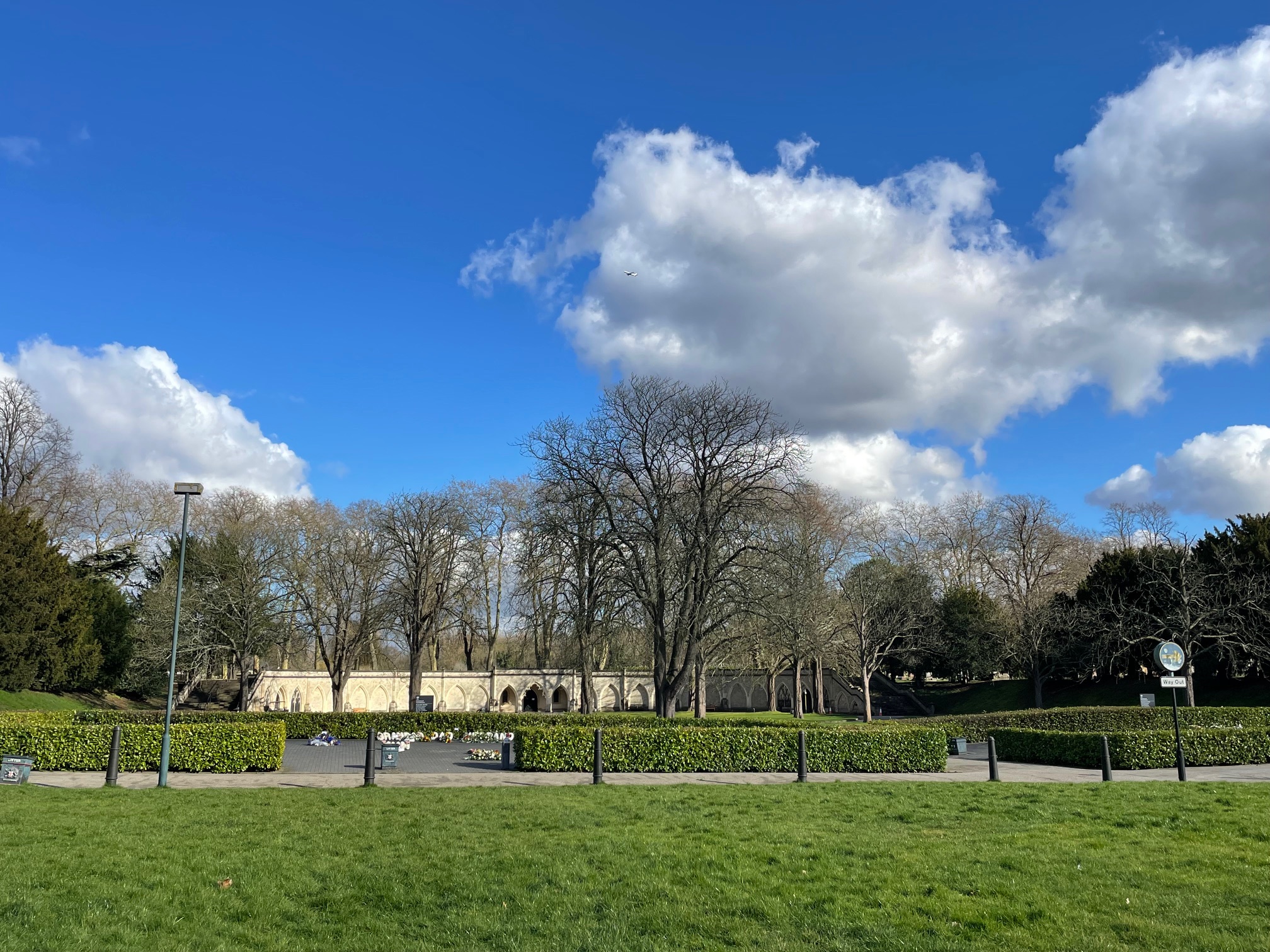
City of London Cemetery and Crematorium: Columbarium, February 2025. Photograph Sally Williams
2025 
2025 
2025 
2025 
2025 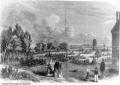
1856 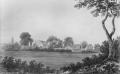
Click a photo to enlarge.
Please note the Inventory and its content are provided for your general information only and are subject to change. It is your responsibility to check the accuracy.