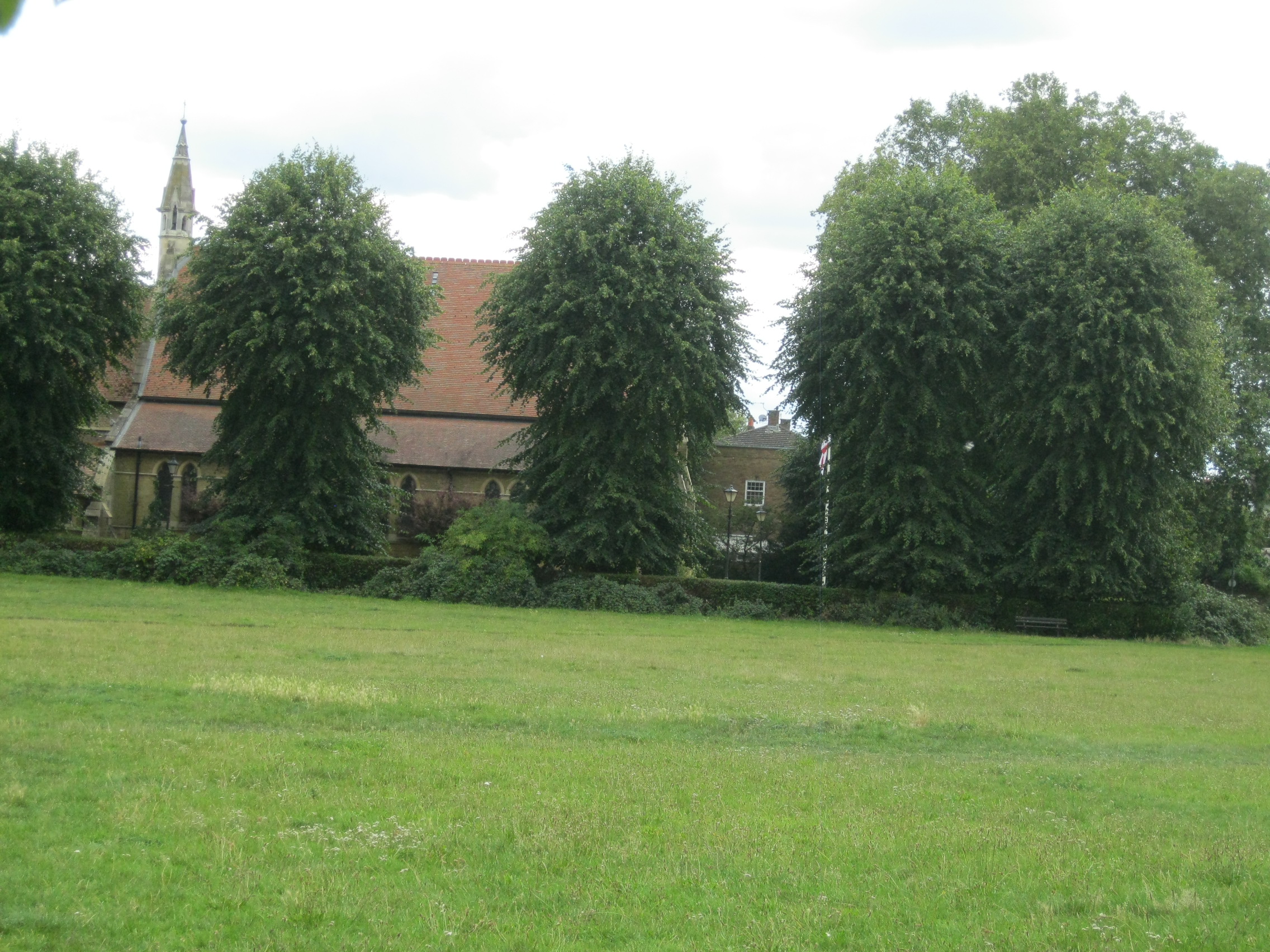
Putney Lower Common (Wandsworth)
Brief Description
Putney was settled from early times. There was Roman occupation here and Lower Richmond Road may have been a Roman Road. Putney Lower Common remained open pasture and farmland, and is contiguous with Barnes Common. Land began to be enclosed from at least the C15th but in 1871 the Wimbledon and Putney Commons Act was passed and the Wimbledon and Putney Conservators, established to preserve the commonland, prevented further encroachment. The common is generally open grassland with mature trees around it, mainly plane trees and chestnuts. Cricket is played in the summer and a fairground visits on bank holidays and in this way the common still offers the traditional activities that were long associated with commons before urbanisation and enclosure overtook them.
Practical Information
- Site location:
- Commondale/Lower Richmond Road/Quens Ride/Common Road
- Postcode:
- SW15
- What 3 Words:
- craft.aura.heave
- Type of site:
- Public Open Land
- Borough:
- Wandsworth
- Open to public?
- Yes
- Opening times:
- unrestricted
- Special conditions:
- Facilities:
- cricket pitch, car park (by Hospital). Nature trails
- Events:
- Public transport:
- Tube: Putney Bridge (District). Rail: Barnes. Bus: 22, 265



- Research updated:
- 01/05/2005
- Last minor changes:
- 29/03/2026
Please check with the site owner or manager for latest news. www.wpcc.org.uk
Full Site Description
In 1469 an area to the south of Putney Lower Common known as 'Pightells' was enclosed by John Twigge for raising sheep for wool, and some further land was lost in the C19th when Elm Lodge was built, rebuilt in 1912 as Putney Hospital. Land was also lost when Putney Lower Common Cemetery (q.v.) was established in 1858. The common now separates the C19th urban development of Putney from its neighbour Sheen but there was little building around the Common until the 1860s, although temporary structures such as pesthouses and agricultural buildings were erected into the C17th.
In the south-east corner is All Saints' Church, separated by a hedge from the common, and built in Gothic Revival style by G E Street in 1874, with a later north-east extension. It has fine stained glass windows by Edward Burne-Jones Studio. The church is surrounded by a pleasant garden with extensive flower beds planted cottage style, lawns and perimeter trees, predominantly lime; the landscaping and paths around the garden have recently been renovated.
Sources consulted:
Ben Weinreb & Christopher Hibbert, 'The London Encyclopaedia' (Macmillan, revised ed. 1993); Bridget Cherry & Nikolaus Pevsner, The Buildings of England: London 2: South (Penguin) 1999
Further Information (Planning and Conservation)
- Grid ref:
- TQ230759 (522968,176027)
- Size in hectares:
- 19.185
- Site ownership:
- Wimbledon and Putney Common Conservators
- Site management:
- Wimbledon and Putney Common Conservators
- Date(s):
- c.1880
- Designer(s):
- Listed structures:
- LBII*: All Saints Church
- On National Heritage List for England (NHLE), Parks & Gardens:
No- Registered common or village green on Commons Registration Act 1965:
Wimbledon & Putney Commons Act 1871- Protected under London Squares Preservation Act 1931:
No
Local Authority Data
The information below is taken from the relevant Local Authority's planning legislation, which was correct at the time of research but may have been amended in the interim. Please check with the Local Authority for latest planning information.
- On Local List:
- No
- In Conservation Area:
- No
- Tree Preservation Order:
- No
- Nature Conservation Area:
- Yes - Borough Importance I
- Green Belt:
- No
- Metropolitan Open Land:
- Yes
- Special Policy Area:
- No
- Other LA designation:
- Common. Strategic View Corridor
Photos

Putney Lower Common - Photo: Colin Wing
Date taken: 14/08/23 14:28Click a photo to enlarge.
Please note the Inventory and its content are provided for your general information only and are subject to change. It is your responsibility to check the accuracy.