Wandsworth Common (Wandsworth)
Brief Description
Wandsworth Common is an important historic common, the remains of more extensive commonland that was part of the wastes of the Manors of Battersea and Wandsworth; by the C19th it had been sub-divided by the railway and encroached upon by building as London was developed. Attempts by local people to preserve the Common against further encroachment began in earnest in 1868 when appeals were made to the MBW to take over responsibility following the Metropolitan Commons Act of 1866, but this was initially unsuccessful. In 1870 a Common Defence Committee was set up, later to become the Wandsworth Common Preservation Society. In 1887 the Common was transferred to the MBW who carried out improvements including planting, paths layout, creation of the ornamental lakes from old gravel pits as well as the smaller Three Island Pond near Bolingbroke Grove. In 1898 the Common became the responsibility of the new LCC who in 1912 purchased an area of 20 acres of open land to extend the common.
Practical Information
- Previous / Other name:
- Battersea West Heath; Wandsworth East Heath
- Site location:
- Wandsworth Common Westside/Northside/Bolingbroke Grove/Nightingale Lane/Trinity Road
- Postcode:
- SW12/SW11/SW18
- What 3 Words:
- over.edits.wool
- Type of site:
- Public Open Land
- Borough:
- Wandsworth
- Open to public?
- Yes
- Opening times:
- unrestricted. Nature Study Centre open 2-4pm Wed; 2.30-4.30pm on 1st Sun of month.
- Special conditions:
- Facilities:
- Café, sports pitches, tennis courts, bowling, lake (fishing in season, membership required), Trim Trail, children's playground, One O'Clock Club. Nature Study Centre
- Events:
- Public transport:
- Rail: Wandsworth Common. Bus: 77, 219, 349, G1



- Research updated:
- 01/07/2005
- Last minor changes:
- 29/03/2026
Please check with the site owner or manager for latest news. www.wandsworth.gov.uk/homepage/41/parks_and_open_spaces
Full Site Description
Wandsworth Common is the remains of more extensive commonland that earlier went by a number of names including Battersea West Heath and Wandsworth East Heath. It was part of the wastes of the Manor of Battersea and Wandsworth; by the C19th it had been sub-divided by the railway and encroached upon by building as London was developed, with some 53 enclosures between 1794 and 1866. The larger areas enclosed were taken for building the Royal Victoria Patriotic Building (q.v.), the industrial school of St James, Allfarthing Piece, McKellar's Triangle, the Justices of Surrey. Attempts by local people to preserve the Common against further encroachment began in earnest in 1868 when appeals were made to the Metropolitan Board of Works to take over responsibility, following the Metropolitan Commons Act of 1866, but this was initially unsuccessful. In 1870 a Common Defence Committee was set up, later to become the Wandsworth Common Preservation Society. Action was taken in April to try and keep Plough Green open and in the months that followed, fund-raising efforts and lobbying of support accelerated. Eventually Earl Spencer, Lord of the Manor, agreed to transfer most of the common to the Defence Committee excluding the area that later became Spencer Park (q.v.). A Bill went through Parliament in July 1871, the Wandsworth Common Act, and part of the common was then transferred to a group of Conservators elected by inhabitants of Battersea and Wandsworth for a £250 annuity paid to Earl Spencer. This annuity and maintenance costs were raised by a special rate levied of the inhabitants.
In 1887 under the Metropolitan Board of Works Act 1887 Wandsworth Common transferred to the MBW who carried out a number of improvements including planting, paths layout, creation of the ornamental lakes from old gravel pits as well as the smaller Three Island Pond near Bolingbroke Grove. A bandstand was erected c.1900 but has since been demolished. In 1898 the Common had become the responsibility of the new London County Council who in 1912 purchased an area of 20 acres of open land to extend the common. This had belonged to the Royal Patriotic Fund Company but prior to the 1850s had been part of the common. The cost of £12,000 included building a wall between the open space and the Royal Patriotic Fund Company's land. However, before this area could be provided for the public's use, it was taken over in WWI for the third London General Hospital by the Government. When it was reinstated after the war, facilities were provided including a bowling green and tennis courts.
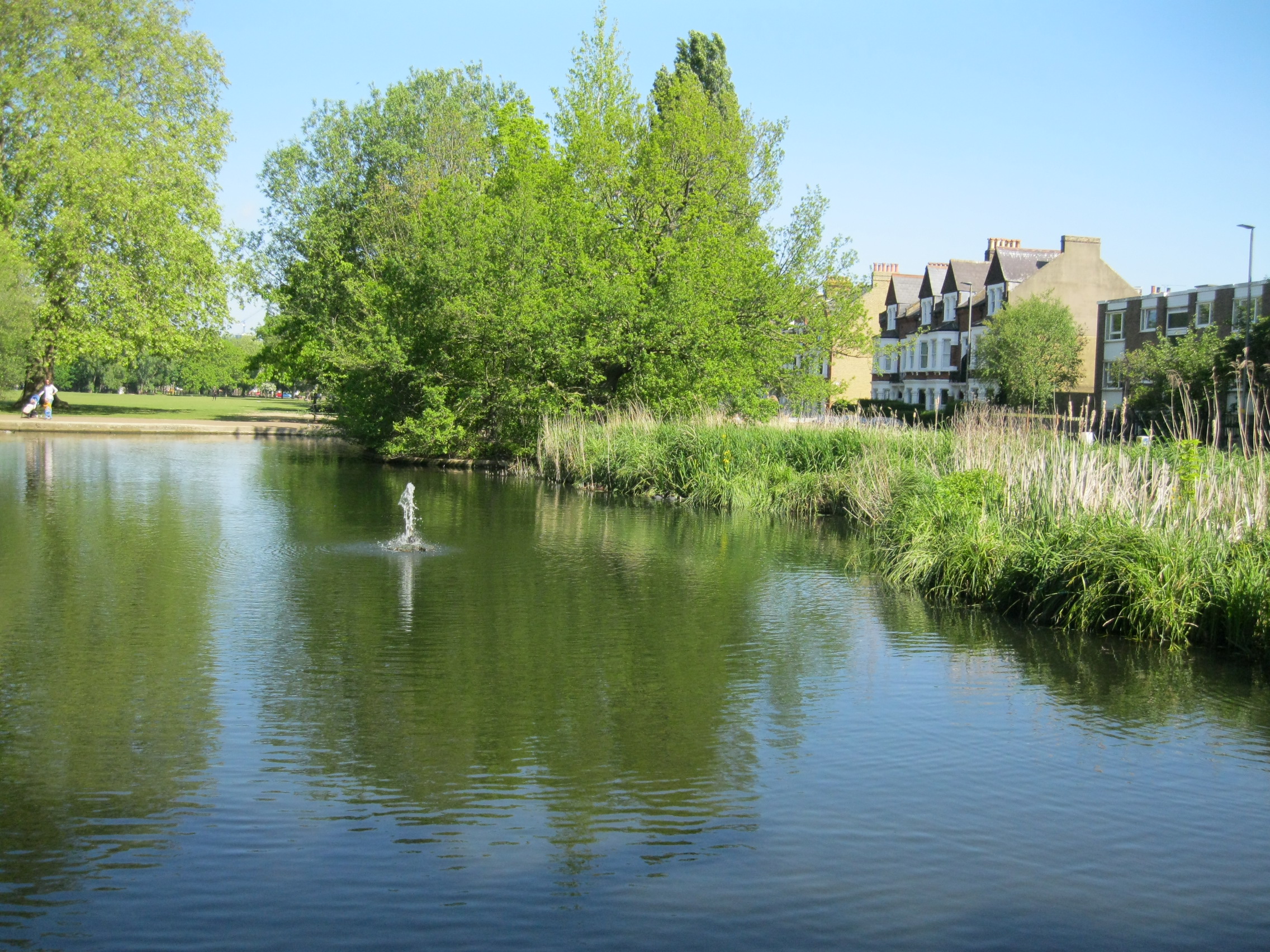
Since 1971 responsibility for Wandsworth Common transferred to LB Wandsworth and again improvements were carried out. Around the common's boundaries are many early C19th and Edwardian housing as well as the White Cottage by Voysey (1905) and St Mark's Church at Battersea Rise. On Windmill Road is a weather-boarded wind pump built in 1837-40 to restore the water supply that had been disrupted by the nearly railway cutting, but it was redundant by the 1870s and now stands without its sails.
Today the common includes 25 acres known as 'The Scope', an area designed to create an ecologically rich environment. The Nature Study Centre is based here and provides support for ecological and educational work in the Borough.
Sources consulted:
Bridget Cherry & Nikolaus Pevsner, The Buildings of England: London 2: South (Penguin) 1999; 'The London County Council and what it does for London: London Parks and Open Spaces' (Hodder & Stoughton, 1924); LB Wandsworth, Wandsworth Common Conservation Area Character Statements; Wandsworth Common Nature Trail leaflet, LB Wandsworth, 1990s; The Parks Agency 'Commons, Heaths and Greens in Greater London. A short report for English Heritage', 2005
Further Information (Planning and Conservation)
- Grid ref:
- TQ271751 (527127,174112)
- Size in hectares:
- 71.7 (69.43 registered common)
- Site ownership:
- LB Wandsworth (part registered under Land Registration Acts)
- Site management:
- Parks Service; Management Advisory Committee
- Date(s):
- 1871; 1887; 1912-20s
- Designer(s):
- Listed structures:
- LBII*: St Mark's Church. LBII: Windmill (Windmill Road)
- On National Heritage List for England (NHLE), Parks & Gardens:
No- Registered common or village green on Commons Registration Act 1965:
Yes: Common (CL32)- Protected under London Squares Preservation Act 1931:
No
Local Authority Data
The information below is taken from the relevant Local Authority's planning legislation, which was correct at the time of research but may have been amended in the interim. Please check with the Local Authority for latest planning information.
- On Local List:
- No
- In Conservation Area:
- Yes
- Conservation Area name:
- Wandsworth Common
- Tree Preservation Order:
- Yes (borders)
- Nature Conservation Area:
- Yes - Borough Importance I
- Green Belt:
- No
- Metropolitan Open Land:
- Yes
- Special Policy Area:
- No
- Other LA designation:
- Common
Photos

Wandsworth Common - Photo: Colin Wing
Date taken: 06/05/20 10:29Click a photo to enlarge.
Please note the Inventory and its content are provided for your general information only and are subject to change. It is your responsibility to check the accuracy.