
Paddington Street Gardens North and South (Westminster)
Brief Description
Paddington Street Gardens are on land formerly used for burials and is split into two parts by Paddington Street. The larger South Garden represents the older burial ground consecrated in 1733. The land was granted by the Earl of Oxford, one of whose conditions that a workhouse be provided, which was erected in 1750-52. By 1771 further burial space was needed and the parish bought land north of Paddington Street, now the North Garden. A larger workhouse was built to the north in 1775, on the present site of the University of Westminster. The burial ground was closed in 1814 when St John's Wood Burial Ground opened; it was laid out as a public recreation ground in 1885 and was opened in 1886 by Princess Louise. Most gravestones were removed although a fine C18th mausoleum in the south garden commemorates the wife of Richard Fitzpatrick.
Practical Information
- Previous / Other name:
- St George's Burial Ground
- Site location:
- Paddington Street, Marylebone
- Postcode:
- W1U 5QA
- What 3 Words:
- feel.nurse.sofa
- Type of site:
- Public Gardens
- Borough:
- Westminster
- Open to public?
- Yes
- Opening times:
- 7am - dusk
- Special conditions:
- Dogs on leads, no cycling, no music
- Facilities:
- Children's playground; toilets
- Events:
- Summer concerts and other events
- Public transport:
- Tube: Baker Street (Bakerloo, Hammersmith & City, Circle, Metropolitan, Jubilee), Bond Street (Central, Jubilee). Bus: 18, 27, 30, 205, 453; 2,13,30,74,82,113,139,189,247



- Research updated:
- 01/11/2007
- Last minor changes:
- 20/07/2023
Please check with the site owner or manager for latest news. www.westminster.gov.uk
Full Site Description
The older burial ground was formed when additional burial ground was needed for the old St Marylebone Parish Church and in 1730 one acre and one rood to the south of what is now Paddington Street, which dates from the 1760s, was granted to the parish by Edward Harley, Earl of Oxford. It was consecrated as a burial ground in 1733. One of the conditions of the Earl's grant was that a workhouse should be provided for the poor of the parish, and this was erected in 1750-52. After 1775 it was used as the parish infirmary until 1791, a larger workhouse having been built to the north, on the present site of the University of Westminster. By 1771 further space for graves was needed and the parish bought the piece of land on the north side of the street from Henry Portman, which was consecrated in 1772. It was in this area to the north that the new workhouse was built, with a larger infirmary built adjacent in 1792.
The burial ground was closed in 1814 when St John's Wood Burial Ground opened (see St John's Wood Church Grounds q.v.), although the land remains consecrated. It was made into a public recreation ground in 1885, which was opened on 6 July 1886 by Princess Louise. The garden was designed by Fanny Wilkinson, landscape gardener of the MPGA, for whom she laid out over 75 public gardens in London, many of them disused burial grounds. The north area has lime and London plane trees around the roughly rectangular lawn with a simple straight walk around it, as shown on the 1914 OS map. The larger area south of Paddington Street has a fine mausoleum in the form of a square building with an ogee dome, which was erected by Richard Fitzpatrick in memory of his wife Susanna who died in 1730. His daughter Anne, Baroness de Robeck, was later buried here in 1829. There are two circular shelters in the gardens, the one to the north is early C20th, the other perhaps slightly later, although it corresponds to buildings shown on the 1914 OS. There is a drinking fountain, now surmounted by an astrolabe and modern railings around the northern lawn. The sculpture, 'Street Orderly Boy' by the Milanese artist Donato Barcaglia,1930, was presented and erected here in 1943. The path system is recognisably similar to that shown on the 1914 OS; trees include Cherries, Laburnum, Hawthorn and shrubs, notable London Planes and mature Limes along the western boundary. On the south side of Paddington Green is the St Marylebone Youth Centre Club.
Sources consulted:
Thomas Smith, History of Paddington, 1833; Bridget Cherry and Nikolaus Pevsner, 'The Buildings of England London 3: North West' (1991, reprinted 1999); WCC Paddington Street Gardens Management Plan, 2008-2013; Elizabeth Crawford, 'Enterprising Women: The Garretts and their Circle' (Francis Boutle Publishers, 2nd ed. 2009)
Further Information (Planning and Conservation)
- Grid ref:
- TQ281817 (528136,181770)
- Size in hectares:
- 1.150
- Site ownership:
- WCC
- Site management:
- WCC Parks Service (contractor: Continental Landscapes Ltd)
- Date(s):
- Burial Ground 1731-1837; 1885/86
- Designer(s):
- 1886: MPGA (Fanny Wilkinson)
- Listed structures:
- LBII: Mausoleum to Fitzpatrick family; St Marylebone Youth Centre Club
- On National Heritage List for England (NHLE), Parks & Gardens:
No- Registered common or village green on Commons Registration Act 1965:
No- Protected under London Squares Preservation Act 1931:
No
Local Authority Data
The information below is taken from the relevant Local Authority's planning legislation, which was correct at the time of research but may have been amended in the interim. Please check with the Local Authority for latest planning information.
- On Local List:
- No
- In Conservation Area:
- Yes
- Conservation Area name:
- Portman Estate
- Tree Preservation Order:
- No
- Nature Conservation Area:
- Yes - Local Importance
- Green Belt:
- No
- Metropolitan Open Land:
- No
- Special Policy Area:
- Yes - Area of Special Archaeological Priority
- Other LA designation:
- None
Photos

Paddington Street Gardens - Mausoleum - Photo: Colin Wing
Date taken: 20/07/23 11:20
1995 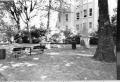
1995 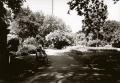
1995 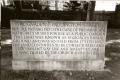
1995 
1995 Click a photo to enlarge.
Please note the Inventory and its content are provided for your general information only and are subject to change. It is your responsibility to check the accuracy.