
Woodcock Park, including Kenton Grange (Brent)
Brief Description
Woodcock Park and Kenton Grange are divided by the Wealdstone Brook, both sections once part of the grounds of Kenton Grange, which was built as Kenton Lodge in 1803-7 with a small garden behind the house. The land extending to the stream was owned in the 1920s by Mr Jeffress, who built the picturesque cottage estate at Brookside Close. Jeffress sold the property in c.1952 to Middlesex County Council who turned Kenton Grange into an old people's home, and the remaining land into a public park. Woodcock Park has a good collection of trees and shrubs, with numerous mature specimens. The area south of the stream is more open with recreational facilities, largely grass and some scattered trees. A Pollinator Biodiversity Garden was created in Woodcock Park in 2022.
Practical Information
- Previous / Other name:
- Kenton Lodge
- Site location:
- Kenton Road/Woodgrange Avenue/Woodcock Hill/Shaftesbury Avenue, Kenton
- Postcode:
- HA3 0RD
- What 3 Words:
- live.villa.cans
- Type of site:
- Public Park
- Borough:
- Brent
- Open to public?
- Yes
- Opening times:
- unrestricted
- Special conditions:
- Facilities:
- Tennis courts, children's playground, Woodcock Park Bowling Club, car park
- Events:
- Public transport:
- Tube: Kingsbury (Jubilee) then bus. London Overground/Tube (Bakerloo): Kenton then bus. Bus: 183, 223



- Research updated:
- 24/11/2024
- Last minor changes:
- 29/03/2026
Please check with the site owner or manager for latest news. https://www.brent.gov.uk/parks-leisure-and-healthy-living/parks-and-open-spaces/park-finder/woodcock-park; https://www.friendsofwoodcockpark.uk
Full Site Description
Woodcock Park is in two parts, divided by the Wealdstone Brook, which runs through the park unculverted. The stream divides for a short stretch with a man-made channel running straight and the original course of the stream to the south, creating an island before meeting up again some 80 metres to the east, which has grass and some mature horse chestnuts and other trees. The northern area was once part of the grounds of Kenton Grange built as Kenton Lodge in 1803-7 for John Lambert, later extended in 1865 and 1896. Other residents included John Gwynne, inventor of the centrifugal pump and Frederick Sang, artist and architect. The house had a small garden behind the house. The land extending to the Wealdstone Brook was owned in the 1920s by a Mr Jeffress, who built the picturesque cottage estate in c.1920 and whose son Joseph Jeffress developed a miniature railway round the embankment of the stream, engaging companies to run the trains. Jeffress sold the land in c.1952 to Middlesex County Council who turned Kenton Grange into an old people's home, and the remaining land into a public park.
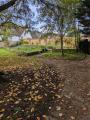
Woodcock Park has a good collection of trees and shrubs, with numerous mature specimens, including an 130 year old Chinese wing-nut, copper beech, single-leafed ash, cedar, holm oak, Oriental plane, various ornamental conifers, dawn redwood, an ancient mulberry at least 160 years old, willows and a number of mature oaks. Kenton Grange is now St Luke's Hospice in the private grounds of which the Victorian stabling block and two lodges remain. The area of the park south of the Wealdstone Brook is more open with recreational facilities, largely grass and some scattered trees, mostly recent planting although there are a few older horse chestnuts, weeping willow and poplars.
Woodcock Park Bowling Club has been playing here since 1953, although plans for a bowls club date from 1938 when William Harrison, a member of Kenton Bowling Club, held discussions with Wembley Borough Council. Work on digging the foundations for the green began in 1938, but had to be abandoned at the outbreak of WWII. During the war the site of the present pavilion was used as ARP (Air Raid Precautions) Post 17 and local Fire Watchers carried out training exercises on the area that is now the bowling green. The green and Bowls Pavilion were completed for the Inaugural Meeting of the Club on 30 January 1953 at which time Club Officers were elected and a Constitution agreed. The Club's first fixture was a game played against a team from St John's Church.
Friends of Woodcock Park was set up to preserve and care for the park, and collaborates with local schools, charities, businesses and other organisations. A variety of projects have been undertaken, including improvements to the children's play area, an outdoor gym, and a mural that depicts the park and its wildlife, flora and fauna, the result of a joint project with St Gregory's Catholic Science College. In recent years Woodcock Park has won London in Bloom Gold awards three years in a row.
Sources consulted:
Ian Yarham, Meg Game 'Nature Conservation in Brent, Ecology Handbook 31', London Ecology Unit, 2000; Bridget Cherry & Nikolaus Pevsner, The Buildings of England, London 3: North West (Penguin, 1999 ed) p.324/5; Ben Weinreb & Christopher Hibbert, 'The London Encyclopaedia' (Macmillan, revised ed. 1993). Woodcock Park Bowling Club History: https://www.woodcockparkbowlsclub.co.uk/club-history
Further Information (Planning and Conservation)
- Grid ref:
- TQ177885 (517750,188600)
- Size in hectares:
- 11
- Site ownership:
- LB Brent
- Site management:
- Parks Service
- Date(s):
- 1803
- Designer(s):
- Listed structures:
- Kenton Grange is locally listed.
- On National Heritage List for England (NHLE), Parks & Gardens:
No- Registered common or village green on Commons Registration Act 1965:
No- Protected under London Squares Preservation Act 1931:
No
Local Authority Data
The information below is taken from the relevant Local Authority's planning legislation, which was correct at the time of research but may have been amended in the interim. Please check with the Local Authority for latest planning information.
- On Local List:
- No
- In Conservation Area:
- No
- Tree Preservation Order:
- Not known
- Nature Conservation Area:
- Yes - Local or Boro II Importance (part/see note)
- Green Belt:
- No
- Metropolitan Open Land:
- No
- Special Policy Area:
- No
- Other LA designation:
- Public Open Space. NCA along course of Wealdstone Brook
Photos

Woodcock Park/Kenton Grange, June 2001. Photo: S Williams
2024 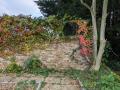
2024 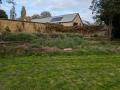
2024 
2001 
2001 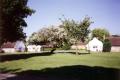
2001 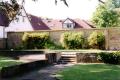
2001 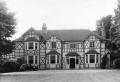
1971 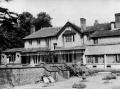
1971 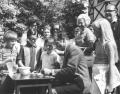
1969 Click a photo to enlarge.
Please note the Inventory and its content are provided for your general information only and are subject to change. It is your responsibility to check the accuracy.