
St Magnus the Martyr Churchyard (City of London)
Brief Description
A church dedicated to St Magnus the Martyr has been on the site from at least the C11th. An earlier building destroyed in the Great Fire was rebuilt by Wren in 1671-84, the stone tower completed some 30 years later, its projecting clock once the only clock visible to those crossing London Bridge. Among those buried here were various City dignitaries including Lord Mayors of London of the C14th-C17th. The church was substantially altered in the 1760s firstly following a fire and soon after this when the road onto Old London Bridge was widened. A pedestrian route was created by demolishing two of the church's west bays, when the lower storey of the tower became an external porch. In the churchyard is a fragment of timber, one of the oak baulks of which the early Roman embankment was built, and fragments of stone arches from Old London Bridge.
Practical Information
- Site location:
- Lower Thames Street
- Postcode:
- EC3R 6DN
- What 3 Words:
- rushed.ankle.object
- Type of site:
- Public Gardens
- Borough:
- City of London
- Open to public?
- Yes
- Opening times:
- unrestricted. Church: Tue-Fri: 10am-4pm, Sun 10am-2pm
- Special conditions:
- Facilities:
- Events:
- Public transport:
- Tube: Monument (District, Circle) / Bank (Central, DLR, Northern, Waterloo & City)



- Research updated:
- 01/05/2010
- Last minor changes:
- 19/07/2023
Please check with the site owner or manager for latest news. www.cityoflondon.gov.uk/openspaces
Full Site Description
A church dedicated to St Magnus the Martyr has been on the site from at least the C11th and an earlier building was destroyed in the Great Fire. Among those buried here were Henry Vevale in 1400 and various City dignitaries including a number of Lord Mayors of London of the C14th to C17th. Following Dissolution of the Monasteries the church came into possession of the crown and was granted to the Bishop of London by Queen Mary in 1553. After the Fire, rebuilding by the parish church was begun in 1668 and completed by Wren in 1671-84, the stone tower with octagonal cupola completed some 30 years later. The clock that projects from the tower was once the only clock visible to those crossing London Bridge and was presented by Sir Charles Duncombe in the early C18th, who had apparently been late for an appointment as an apprentice due to not finding a clock to tell him the time and had decided that if he ever had the means he would redress this so that others might not suffer in like manner. Duncombe also presented the church with the organ of 1712 by Jordan. A plaque on the site states that the churchyard had formed part of the roadway approach to the Old London Bridge between 1176 and 1831. The church was substantially altered in the 1760s firstly following a fire destroying the vestry room and church roof and soon after this when the road onto Old London Bridge was widened and a pedestrian route created by demolishing two of the church's west bays, at which time the lower storey of the tower became an external porch.
At one time the rector was Miles Coverdale who was responsible for the first complete English bible published in 1535; a tablet was erected to him in St Magnus in 1837 and his remains were moved here from St Bartholomew's-by-the-Exchange when that church was destroyed in 1840. The parish was amalgamated with that of St Margaret New Fish Street, a church destroyed in the Great Fire, its site is now The Monument, and also that of St Michael Crooked Lane, a C13th church demolished in 1831 when London Bridge Approach was built.
The churchyard is largely paved with some planting towards the river up low steps and there are railings fronting onto Lower Thames Street. In the churchyard is a fragment of timber, one of the oak baulks of which the early Roman embankment was built, which was found on the other side of Lower Thames Street in 1931. A Roman gateway leading from the bridge to the City of London probably stood where the tower is. Also in the churchyard are a number of fragments of stone arches from Old London Bridge discovered in 1921 when Adelaide House, adjacent to the church, was built.
Sources consulted:
Simon Bradley & Nikolaus Pevsner, 'The Buildings of England, London 1: The City of London', 1997 (1999 ed.); George Godwin & John Britton 'The Churches of London: A history and description of the Ecclesiastical Edifices of the Metropolis, Volume II', London, 1839; Philip Norman, 'The London City Churches, Their Use, Their Preservation and Their Extended Use', The London Society, (1920s); London Diocesan Advisory Committee for the Care of Churches data
Further Information (Planning and Conservation)
- Grid ref:
- TQ329806 (532890,180660)
- Size in hectares:
- 0.0318
- Site ownership:
- Diocese of London
- Site management:
- City of London Corporation Open Spaces Dept.
- Date(s):
- medieval; 1671
- Designer(s):
- Listed structures:
- LBI: St Magnus the Martyr Church
- On National Heritage List for England (NHLE), Parks & Gardens:
No- Registered common or village green on Commons Registration Act 1965:
No- Protected under London Squares Preservation Act 1931:
No
Local Authority Data
The information below is taken from the relevant Local Authority's planning legislation, which was correct at the time of research but may have been amended in the interim. Please check with the Local Authority for latest planning information.
- On Local List:
- No
- In Conservation Area:
- No
- Tree Preservation Order:
- No
- Nature Conservation Area:
- No
- Green Belt:
- No
- Metropolitan Open Land:
- No
- Special Policy Area:
- Yes - Thames Policy Area
- Other LA designation:
- Strategic Viewing Corridor
Photos

St Magnus the Martyr Churchyard Plaque, May 2010. Photo: S Williams
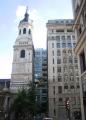
2010 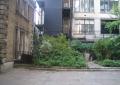
2010 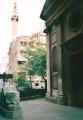
2002 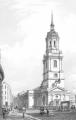
1838 Click a photo to enlarge.
Please note the Inventory and its content are provided for your general information only and are subject to change. It is your responsibility to check the accuracy.