The Garden Museum (St Mary-at-Lambeth Churchyard) (Lambeth)
Brief Description
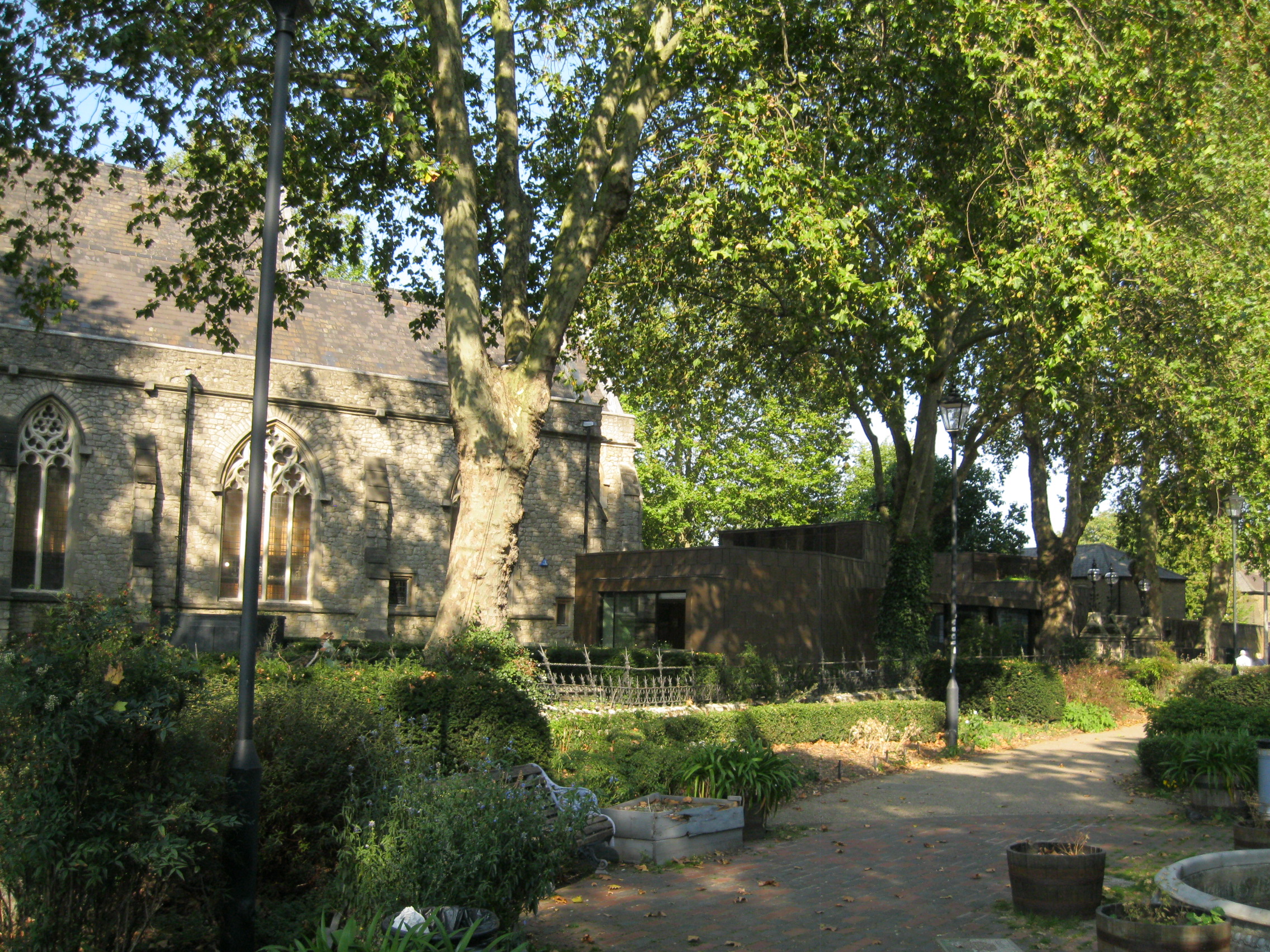
St Mary-at-Lambeth Church dates from 1377 and was restored in the 1850s, but by 1971 the church was redundant and threatened with demolition, its churchyard unkempt. In 1976 the Tradescant Trust was formed and campaigned to save church and churchyard for conversion into a museum and conference centre for garden history. The site has particular importance for garden history with 3 generations of the Tradescant family of plant collectors buried here. By February 1979 sufficient funds were raised and restoration began. The former churchyard behind the church was laid out as a C17th style knot garden. The Museum of Garden History, now renamed the Garden Museum, was officially opened in 1983 by HM Queen Elizabeth the Queen Mother. Among the monuments in the garden is the Tradescant sarcophagus of 1662, and that of Admiral William Bligh of 'The Bounty', erected in 1817. The Museum has undergone further development since it opened, most recently in 2015 when a major redevelopment project was undertaken to provide a much larger space for the permanent collection to be displayed, two new learning spaces, a new cafe and two new gardens, replacing the 1980s courtyard garden and the churchyard in front of the church.
Practical Information
- Previous / Other name:
- Lambeth Parish Church
- Site location:
- Lambeth Palace Road
- Postcode:
- SE1 7LB
- What 3 Words:
- clash.global.loses
- Type of site:
- Churchyard, Institutional Grounds
- Borough:
- Lambeth
- Open to public?
- Yes
- Opening times:
- Front churchyard unrestricted. Museum open daily 10am-5pm
Has taken part in Open Garden Squares Weekend 12 times, most recently in 2015. - Special conditions:
- Admission includes access to garden, permanent collections and temporary exhibitions (check website for current charges)
- Facilities:
- Museum, Garden Café, shop, toilets.
- Events:
- Temporary exhibitions, lectures, workshops
- Public transport:
- Rail: Waterloo. Tube: Waterloo (Northern, Waterloo and City, Jubilee, Bakerloo); Lambeth North (Northern) then bus, Lambeth North (Bakerloo). Bus: 3, 77, 344, 507



- Research updated:
- 05/09/2023
- Last minor changes:
- 18/09/2023
Please check with the site owner or manager for latest news. www.gardenmuseum.org.uk
Full Site Description
St Mary's Church dates from 1377 and was restored by Philip Hardwick in the 1850s. The church and its churchyard is a most important site from the point of view of garden history, where three generations of the Tradescant family are buried. The Tradescants established a physic garden in South Lambeth and their collections were subsequently taken over by Elias Ashmole and eventually went to the Ashmolean Museum in Oxford. John Tradescant the Elder (c.1570-1638) was gardener to the first Earl of Salisbury at Hatfield House, Lord Wotton, the Duke of Buckingham and Charles I and Henrietta Maria. He travelled widely including to Russian, North Africa and North America and introduced many plants to England. His son John Tradescant the Younger (1608-1662) became a freeman of the Gardeners' Company and succeeded his father as royal gardener at Oaklands. He made 3 visits to Virginia and introduced many American plants to England, including Swamp Cypress and Tulip Tree. The Tradescant sarcophagus was erected in St Mary's churchyard in 1662, constructed of hard sandstone with high relief carvings on all sides depicting classical and Egyptian ruins, with trees at the corners and other flora and fauna, and a mythical hydra at one end. The slab on the lid dates from 1853 and records the tomb's repair in 1773 and its restoration in 1853, with a poem in honour of the two Tradescants. Adjacent to the Tradescant tomb is the Coade stone sarcophagus of Admiral William Bligh, erected in 1817. As Captain of 'The Bounty', Bligh brought the breadfruit tree from the Marquesas to the West Indies. Also in the churchyard is the tomb of the Sealy family, famous for Coade stone.
By 1971 the church was redundant and threatened with demolition, and churchyard unkempt. The OS map of 1934 showed it to be simply laid out. In 1976 the Tradescant Trust was formed and began to campaign to save the church and churchyard and turn it into a museum and conference centre for garden history. By February 1979 sufficient funds had been raised and restoration of the church and gardens began, opening in the early 1980s. The area to the east of the church was laid out in 1979 by Lady Salisbury, owner of Hatfield House, as a C17th parterre garden surrounded by clipped box hedges with a topiary spiral in the centre of old golden holly, and planted with columbines, old fashioned roses, foxgloves and other herbaceous plants, herbs and bulbs which were available in the Tradescants' day. This garden had old brick paths, seating and retained a number of graves; among the numerous plants was a mature strawberry tree, and a large climbing musk rose reputedly the largest in the country. The Museum of Garden History, later renamed the Garden Museum, was officially opened in 1983 by HM Queen Elizabeth the Queen Mother. Since then, the Museum has continually evolved, expanding its collection of historic tools and artefacts, providing displays about the history of gardening. A regular programme of lectures and educational events are provided, and artists' installations have taken place in both the museum and courtyard garden, and the Tradescant and Bligh tombs have been restored. In 2007 a wild garden was created in the former churchyard in front of St Mary's, surrounded by mature plane trees.
In 2015, the Garden Museum closed for 18 months while a major redevelopment project was undertaken to provide a much larger space for the permanent collection to be displayed, two new learning spaces, a new cafe and two new gardens, replacing the 1980s courtyard garden and the churchyard in front of the church. The new extension to the Museum has been designed around a garden designed by Dan Pearson as an 'Eden' of rare plants, inspired by the Tradescants' plant collecting. The centrepiece of this new garden surrounds the Tradescant family tomb, and extends through a pergola planted with climbers to the east wall, and through the new cafe to the road. In order to give the surprise at new plants that visitors to Tradescant's Ark experienced in his time, Pearson chose introductions by living plant collectors such as Sue and Bleddyn Wynn-Jones of Crug Farm in North Wales, taking advantage of the sheltered situation. His design is also a response to the bronze and glass architecture of the extension while creating a calm, reflective atmosphere.
The area of churchyard at the front of the Museum has been re-designed by Christopher Bradley-Hole, an architect who retrained as a garden designer, in order to provide a clearer and more welcoming entrance to the Museum. The former churchyard, which was heavily shadowed by the surrounding plane trees, discouraged flowers to grow and it was used primarily as a cut through for dog walkers and commuters. The new garden provides a forecourt formed of yew hedges, beyond which the old gravestones are preserved. A temporary surface of gravel will be replaced by limestone paving when sufficient funds are raised, which will also enable new furniture and settings for works of art to be provided.
Sources consulted:
Candidate for Register: Survey of London 'Parish of St Mary Lambeth' Vol XXVI, London 1956; R Nicholson 'A Museum of Garden History', Period Homes Vol 4, no 2 pp.41-45; Arabella Lennox-Boyd, 'Private Gardens of London', London: Weidenfeld & Nicolson, 1990; Tommaso del Buono, 'Beats the M25', Space/The Guardian 8 June 2000; Ian Yarham, Michael Waite, Andrew Simpson, Niall Machin, 'Nature Conservation in Lambeth', Ecology Handbook 26 (London Ecology Unit), 1994; https://gardenmuseum.org.uk/the-museum/development-project/new-gardens/
Further Information (Planning and Conservation)
- Grid ref:
- TQ306790 (530650,179050)
- Size in hectares:
- Site ownership:
- The Tradescant Trust
- Site management:
- The Tradescant Trust
- Date(s):
- Tradescant Garden: 1979
- Designer(s):
- 1979: Lady Salisbury; 2015: Dan Pearson, Christopher Bradley-Hole
- Listed structures:
- LBII*: St Mary's Church, Tradescant sarcophagus, Bligh sarcophagus. LBII: Sealey tomb; Walls, railings, gates & gatepiers to south & west of church
LBII*: St Mary's Church
- On National Heritage List for England (NHLE), Parks & Gardens:
No- Registered common or village green on Commons Registration Act 1965:
No- Protected under London Squares Preservation Act 1931:
No
Local Authority Data
The information below is taken from the relevant Local Authority's planning legislation, which was correct at the time of research but may have been amended in the interim. Please check with the Local Authority for latest planning information.
- On Local List:
- No
- In Conservation Area:
- Yes
- Conservation Area name:
- Lambeth Palace
- Tree Preservation Order:
- No
- Nature Conservation Area:
- Yes - Borough Importance II with Lambeth Palace (?
- Green Belt:
- No
- Metropolitan Open Land:
- No
- Special Policy Area:
- Yes - Lambeth Waterfront APA
- Other LA designation:
- None
Photos

St Mary at Lambeth Churchyard - Photo: Colin Wing
Date taken: 16/09/20 15:30
2011 
1980 Click a photo to enlarge.
Please note the Inventory and its content are provided for your general information only and are subject to change. It is your responsibility to check the accuracy.